Be the expert and discover unlimited possibilities for your motion analysis. Extend from a purely, qualitative 2D video recording to a scientific, quantitative 3D movement study.
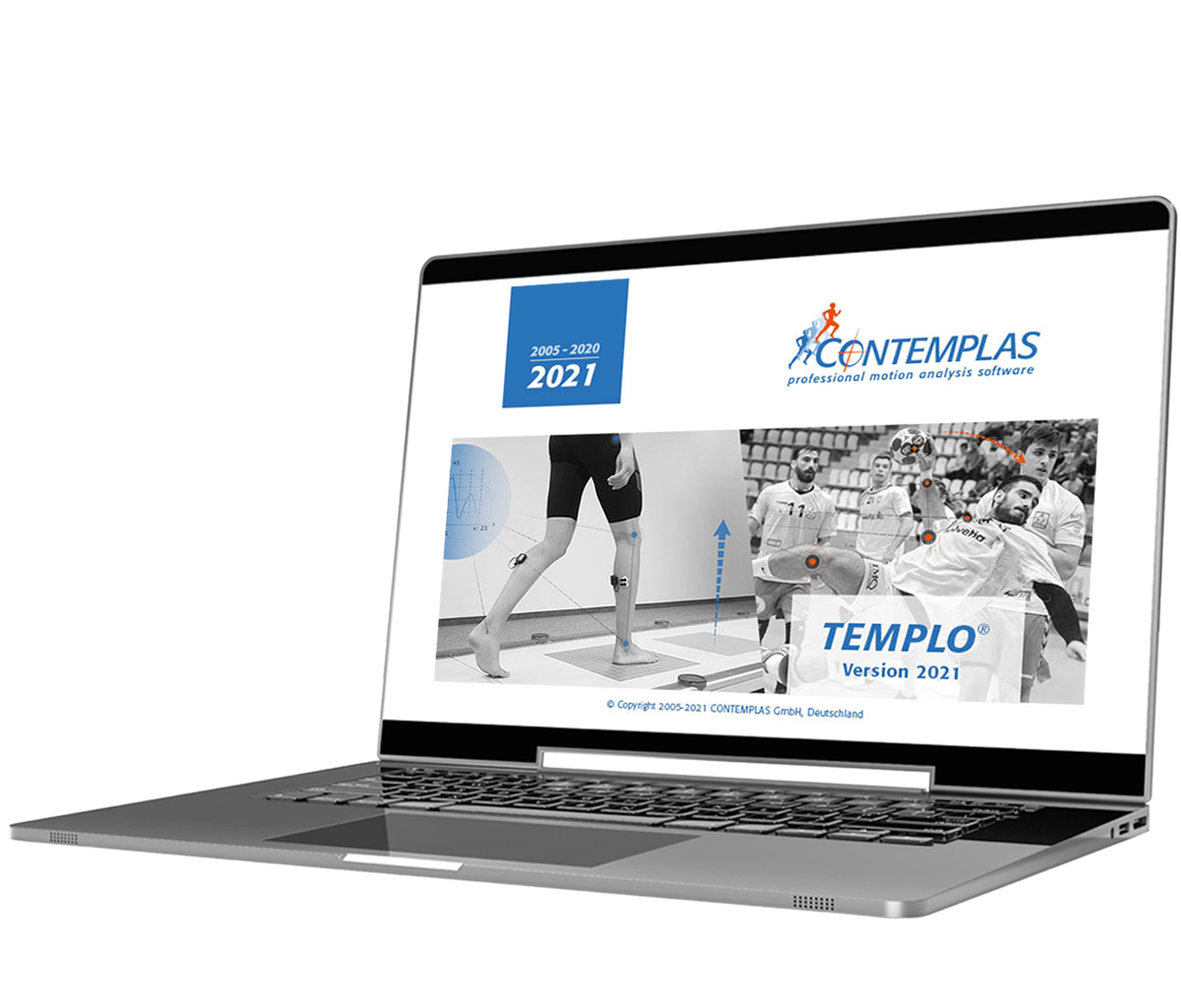
With the TEMPLO® motion analysis software, CONTEMPLAS has developed a first-class video analysis software that is oriented towards the latest state of video technology and image processing.
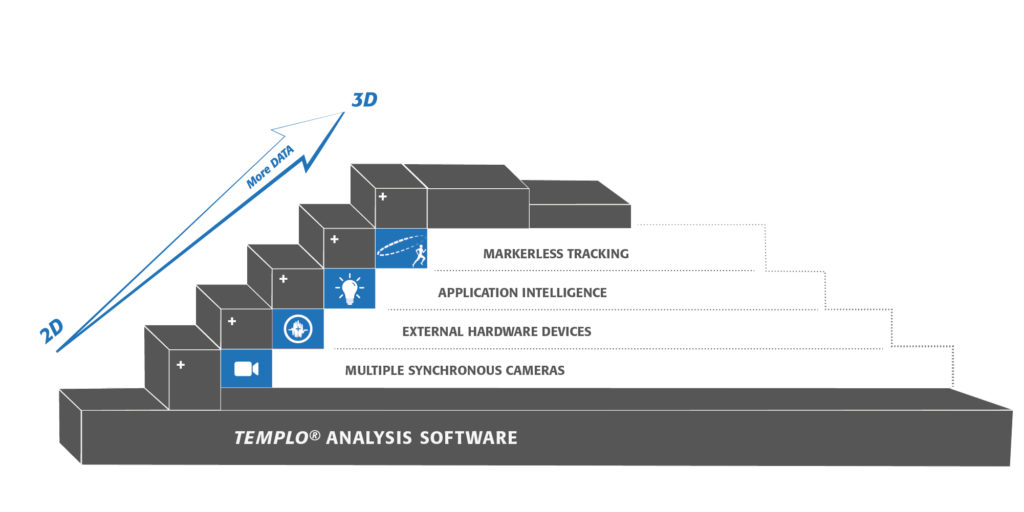
TEMPLO® builds the basis of the modular CONTEMPLAS analysis systems. Its functionality can be extended individually and according to requirements by adding additional hardware (e.g. high-speed cameras, external measuring devices) and intelligent software features (e.g. markerless tracking).
The user-friendly software convinces with clearly definable workflows, adapted to the hardware and software requirements of the respective application purpose and reduced to the essentials!
Choose from our wide range of products for your individual area of application.
Combine your video recordings with other measuring devices and receive comprehensive and precise analysis data at a glance for advising your athlete or patient. Connect…
Intelligent, predefined workflows guide you through your tests. You yourself decide on your needs and results. A clearly structured central database stores all personal test data for temporary or long-term data collection.
MARKERLESS
Avoid the troublesome application or displacement of reflective markers. The new markerless tracking saves you valuable analysis time with the highest measurement accuracy. With just one click, you receive your tracking data for further processing after the recording process.